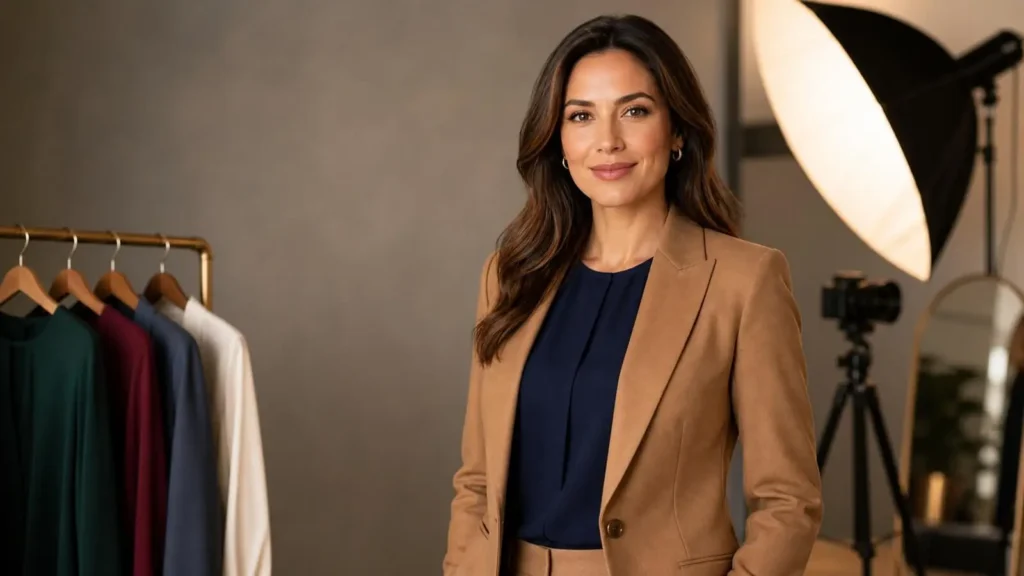
The wrong outfit can make a polished portrait feel unlike you. If you are asking what should I wear for headshots, start with a familiar, well-fitting solid top in a mid-tone color and bring one contrasting layer or alternate top.
That formula works for most professional headshots, LinkedIn photos, and personal-brand portraits. Refine it by considering the image’s destination, the background, the fit within a chest-up crop, and whether the color keeps attention on your face.
The Safest Headshot Outfit When You Need a Fast Answer
Short on time? Build your headshot outfit around a solid mid-tone top, a clean neckline, good shoulder fit, and simple accessories. Navy, charcoal, forest green, burgundy, and slate are reliable starting points because they photograph clearly without demanding more attention than your face.
Add a blazer, overshirt, jacket, or cardigan in a contrasting tone if it suits your work. One removable layer gives the photographer two looks without a complete wardrobe change. It can also add definition around your shoulders.
Choose clothes you have worn before. A familiar garment lets you sit, turn, and breathe comfortably. A new outfit may reveal a stiff collar, pulling buttons, or bunching fabric only after the camera comes out.
Use this default:
- A solid mid-tone top that holds its shape
- A neckline you normally wear
- Small, familiar accessories with limited shine
- One alternate top or removable layer
Adjust the formula if your photographer specifies a light, dark, or branded background. If you know nothing about the setup, send a phone photo of your two options and ask which one will provide better separation.
Dress for the Role and Impression You Want to Create
Would you wear the outfit to an important meeting with the people who will see your photo? If not, it may be too formal, too casual, or simply wrong for your professional identity.
For authority, choose a structured blazer, jacket, or crisp collared garment. For approachability, try a polished knit, simple blouse, open collar, or refined overshirt. Creative professionals can use a restrained signature color, texture, or accessory, provided it does not overpower the face.
Let the destination guide your headshot outfit ideas. A finance executive may need a suit for a company leadership page. A startup founder might look more credible in a clean shirt and jacket. A designer, photographer, or speaker can show more personal style because the image also communicates a brand.
This approach avoids rigid gender rules. Garment type, fit, desired impression, and workplace culture offer more useful guidance than separate lists for men and women.
Wear a suit when it reflects how you meet clients or represent your organization. Skip it when it feels like a costume. The best outfit presents a polished version of you, not an invented character.
Choose Colors That Separate You From the Background
A good color can fail when it blends into the backdrop. A black top against black may lose its edges, while a pale shirt against white can leave the portrait looking like a floating head.
Start with contrast. Against a white or pale background, choose a mid-tone or darker top, or add a darker jacket over a light shirt. Against a dark background, select a lighter or richer mid-tone that keeps your shoulders visible. Gray backgrounds are flexible, but avoid an exact tonal match.
When the background is unknown, solid jewel tones and muted mid-tones are safer than neon shades or extreme black and white. Navy, forest green, burgundy, and slate are useful best colors for headshots against common neutral studio backgrounds.
Your skin, hair, and eyes matter, but there is no universal palette for any identity. Take a face-first approach. The color should make your features look clear while remaining visually secondary. If your eye goes to the shirt before your expression, lower the saturation or try another tone.
Pure white and black are not automatically wrong. They require more care with lighting and background contrast. Ask your photographer what color will sit behind you, then choose a garment that remains distinct from it. Contrast gives the portrait depth and keeps attention where it belongs.
Prioritize Fit, Shape, and Simple Details
A clean sweater can photograph better than a baggy suit. In a head-and-shoulders crop, fit around the collar, neckline, and shoulders matters more than a label or price.
Check that shoulder seams sit correctly and collars lie flat. Look for pulling across buttons, gaping at the neckline, rolled fabric, and wrinkles that create bright or dark lines under studio lights. Sit and turn slightly in front of a mirror because a garment that looks smooth while standing may bunch when you pose.
Layers can improve shape. A blazer, cardigan, jacket, or overshirt adds clean vertical lines and creates a second look quickly. Make sure the layer can close comfortably even if you plan to wear it open.
Keep jewelry and accessories familiar. Small hoops, studs, a simple necklace, or everyday glasses can support your identity. Highly reflective or oversized pieces may catch the lights and compete with your eyes.
Consider how long the image will be used. A heavy turtleneck can look polished in winter but feel seasonally awkward on a website in July. For a versatile professional headshot, favor comfortable fabrics and details that make sense throughout the year.
What Not to Wear for Headshots
If your clothing is the first thing you notice at profile-photo size, simplify it. Most wardrobe mistakes distract from the face, create a camera problem, or shorten the useful life of the image.
When deciding what not to wear for headshots, avoid or test these items carefully:
- Large logos, slogans, and prominent text
- Neon colors that dominate the frame
- Tight stripes, herringbone, zigzags, and dense repeating patterns
- Clothing that closely matches the background
- Garments that pull, gape, bunch, or wrinkle heavily
- New outfits you have not worn for several hours
- Highly reflective jewelry and accessories
Fine patterns carry a technical risk called moire. It appears as false ripples, banding, or color interference when pattern detail interacts with a digital camera sensor. Removing it cleanly after the shoot can be difficult.
Subtle, low-contrast patterns are not forbidden. Test them with a camera and bring a solid alternative. That backup protects the session if the pattern behaves differently under studio lighting or at the final image size. When in doubt, keep the face more noticeable than the fabric.
Test Your Outfit With Your Phone Before the Shoot
Two minutes with your phone can reveal problems a mirror hides. Test every serious outfit option several days before the session, while you still have time to steam, tailor, or replace a garment.
- Stand in even light and take a chest-up photo from roughly eye level.
- Shrink the image to LinkedIn profile-photo size. Check whether your face remains the first point of attention.
- Inspect the collar, shoulder seams, buttons, wrinkles, and fine patterns. Look for ripples or color bands that suggest moire.
- Apply a black-and-white filter. Make sure your clothing, hair, skin, and likely background remain separated by light and dark values.
Repeat the test with your alternate layer. If a jacket improves structure but may merge with the background, pair it with a contrasting shirt or choose another jacket.
When you do not know the studio background, send both phone photos to the photographer. Mention where the headshot will appear and whether the organization uses color or grayscale images. Choose the outfit that looks clear at thumbnail size, works in black and white, and keeps your face in control of the frame.
Coordinate Team Headshots Without Matching Outfits
Matching clothes do not create the most cohesive team page. Consistent formality, color range, and background contrast do.
Give everyone a short wardrobe brief before the company headshot day:
- Define the dress level with familiar workplace examples
- Share a small palette of coordinated solid colors
- Name or show the planned backdrop
- Exclude large logos, text, neon shades, and dense patterns
- Request a contrasting layer when pale clothing meets a pale background
Allow people to choose the garment type, neckline, and details that fit them. One employee may prefer a blazer, another a structured knit, and another a collared shirt. Their portraits can still look connected when the outfits share the same level of polish and visual restraint.
Circulate the guide with two or three visual examples before shoot day. Ask each person to bring an alternate top or layer. Clear preparation produces consistency without turning the team into a uniformed cast.
Frequently Asked Questions About Headshot Outfits
Should I wear a suit for a professional headshot?
Wear a suit if it reflects your role, workplace culture, and usual client-facing appearance. In a less formal field, a polished shirt, blouse, knit, or structured jacket may feel more credible. Use the important-meeting test from Dress for the Role and Impression You Want to Create above.
What is the safest color when I do not know the backdrop?
A solid mid-tone such as navy, forest green, burgundy, or slate is a dependable choice against many neutral backgrounds. Bring a contrasting alternative and ask the photographer before the session. Do not assume pure white or black will work without knowing the backdrop and lighting plan.
Can I wear patterns in a headshot?
Yes, but choose a subtle, low-contrast pattern and bring a solid backup. Tight stripes, herringbone, zigzags, and dense repeats can create moire or pull attention from your face. Photograph the garment first and check the image for ripples, banding, or distracting detail.
How many outfits should I bring for headshots?
Bring two strong options unless your photographer recommends more. A solid base top plus one removable blazer, cardigan, jacket, or overshirt can create useful variety quickly. Choose clothes you have worn before, and test each chest-up combination with your phone.
Should everyone wear the same thing for team headshots?
No. Set shared rules for formality, coordinated colors, background contrast, logos, and patterns. Then let each person choose a flattering garment type. This produces a cohesive team page while respecting individual fit, comfort, identity, and professional style.