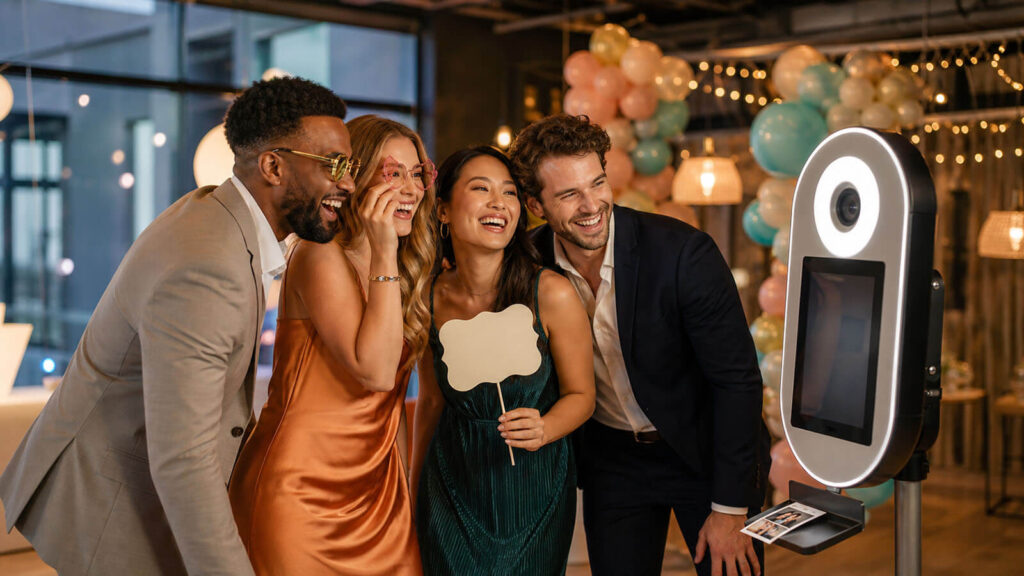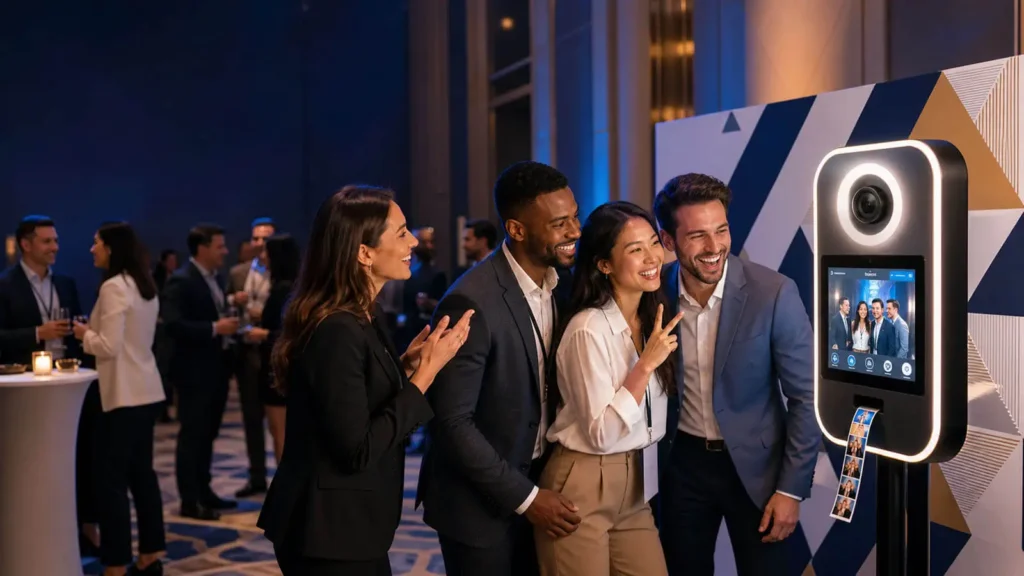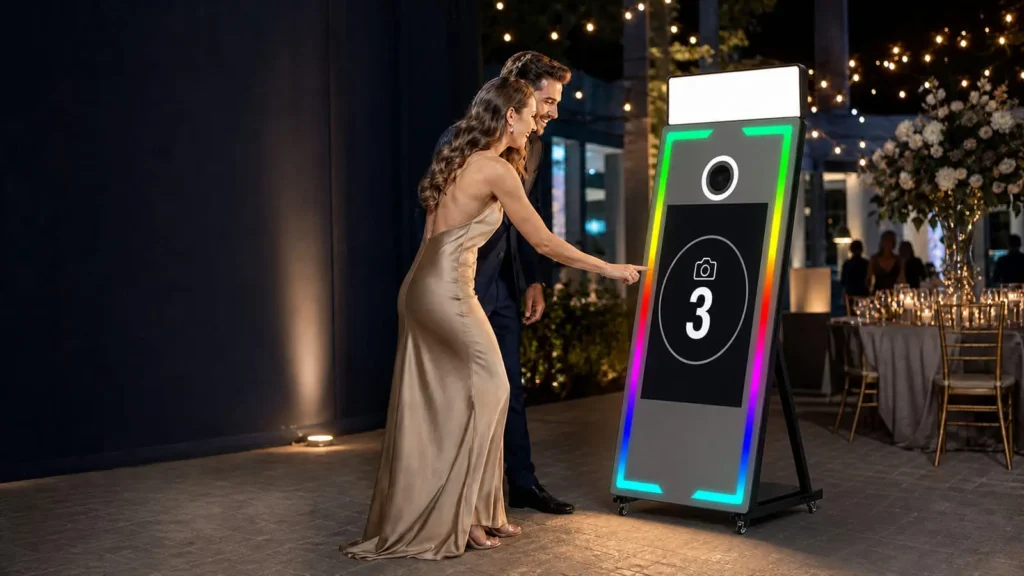
A mirror photo booth is a full-length interactive mirror that combines a camera, touchscreen display, lighting, and photo booth software in one polished event attraction. Guests see their reflection, follow animated prompts, pose, and receive printed or digital photos.
Also called a magic mirror photo booth, it turns a familiar object into guided entertainment. For an operator, its value comes from the complete system behind the glass and how reliably it performs at live events.
How Does a Mirror Photo Booth Work?
The guest experience feels effortless, even though several technologies work together.
A guest touches the mirror to begin. The screen displays a welcome message, pose instructions, or animated prompts, followed by a countdown. A camera captures one or more photos while dedicated lighting produces a consistent exposure.
The guest may then preview the results, retake a photo, add a signature, choose a filter, or apply a themed overlay. The final image can be printed, sent by text or email, downloaded through a QR code, or added to an online gallery. Available options depend on the software, internet connection, printer, and package selected by the operator.
This guided workflow makes a mirror booth feel like an experience rather than a camera placed in front of a backdrop.
What Is Inside a Mirror Photo Booth?
The decorative frame gets attention, but the system behind it determines the quality of every event.
Most professional mirror photo booths contain:
- Two-way mirror glass that reflects guests while allowing on-screen content to remain visible
- A display and touch interface for prompts, previews, signing, and sharing
- A DSLR or another compatible camera for image capture
- A flash, strobe, or integrated light for consistent photos
- A computer running photo booth software
- An optional professional printer for instant keepsakes
- Cables, hubs, power supplies, and network hardware that connect the system
The software controls the session flow, animations, camera, templates, printing, and digital delivery. Hardware and software compatibility matters as much as appearance. A slow touchscreen, unreliable connection, or poorly configured flash quickly undermines an otherwise premium booth.
Commercial buyers should evaluate the booth as an integrated operating system, not merely a mirror shell.
Mirror Booth vs. Traditional and 360 Photo Booths
Choosing by appearance alone can leave you with the wrong booth for the work you plan to sell.
A mirror photo booth specializes in guided, interactive still photography. Its full-length reflective display creates a theatrical focal point, lets guests check their pose, and accommodates groups in an open setup.
Traditional enclosed booths provide privacy and a familiar strip-photo experience. Open-air DSLR or tablet booths are often lighter, simpler to position, and flexible for different backdrops. They can offer many of the same printing and sharing features, but without the large interactive mirror.
A 360 photo booth serves a different purpose. It records moving video as a camera travels around guests, producing social clips rather than focusing on posed still images and instant prints.
Choose a mirror booth for visual presence and guided interaction, an open-air booth for portability, or a 360 booth for motion-based content.
Why Operators and Event Clients Choose Mirror Booths
A mirror booth sells more than a photograph. It creates a visible moment that attracts the next group while the current group is posing.
At weddings and galas, the framed mirror can complement formal decor and produce full-length portraits or printed keepsakes. At corporate events, operators can customize welcome screens, animations, photo templates, logos, and digital delivery. This turns each guest session into a branded interaction rather than a generic photo.
For photo booth businesses, that presentation can support a premium package when backed by professional lighting, responsive software, attractive content, and dependable support. The booth can also differentiate an established DJ, photographer, or event company from providers offering only basic selfie stations.
No booth guarantees revenue. Commercial value depends on local demand, package design, marketing, event execution, and operating costs. The strongest proposition combines memorable guest interaction with a system the operator can deploy consistently.
What to Consider Before Buying a Mirror Photo Booth
A striking booth becomes a poor investment if it is difficult to transport, slow to set up, or unreliable during an event.
Check the complete package before buying. Confirm which camera, computer, flash, printer, and software are included, then verify compatibility among them. Ask how templates and animations are created, whether sharing requires a subscription, and how the system works when venue internet is unstable.
Plan for transport and setup too. A full-size mirror booth can be heavier and bulkier than a tablet booth, so measure your vehicle, doorways, storage area, and transport cases. Reliable operation also requires spare cables, media, power adapters, and a repeatable pre-event checklist.
Lighting conditions matter. Strong daylight can wash out animations behind the reflective glass, create glare, and interfere with some infrared touch systems. Use mirror booths indoors or in a shaded, weather-protected location, and test the booth under actual venue conditions.
Finally, evaluate training, replacement parts, warranty coverage, and technical support. These services reduce downtime and protect the long-term value of the equipment.
Frequently Asked Questions
Is a magic mirror the same as a mirror photo booth?
Yes. “Magic mirror” is a common marketing name for an interactive mirror photo booth. Individual products differ in size, camera, software, lighting, printing, and sharing capabilities, so compare complete specifications rather than relying on the name.
Does a mirror photo booth need an attendant?
Not always. Guided prompts can make a mirror booth self-service, but an attendant helps manage guest flow, prints, props, troubleshooting, and equipment security. Staffed service is especially valuable at busy weddings, corporate events, and public activations.
Does a mirror photo booth have to print photos?
No. A mirror booth can provide instant prints, digital delivery, or both. The right setup depends on the event package and guest expectations. Digital-only operation reduces printer equipment, but physical photos remain a valued keepsake at many events.